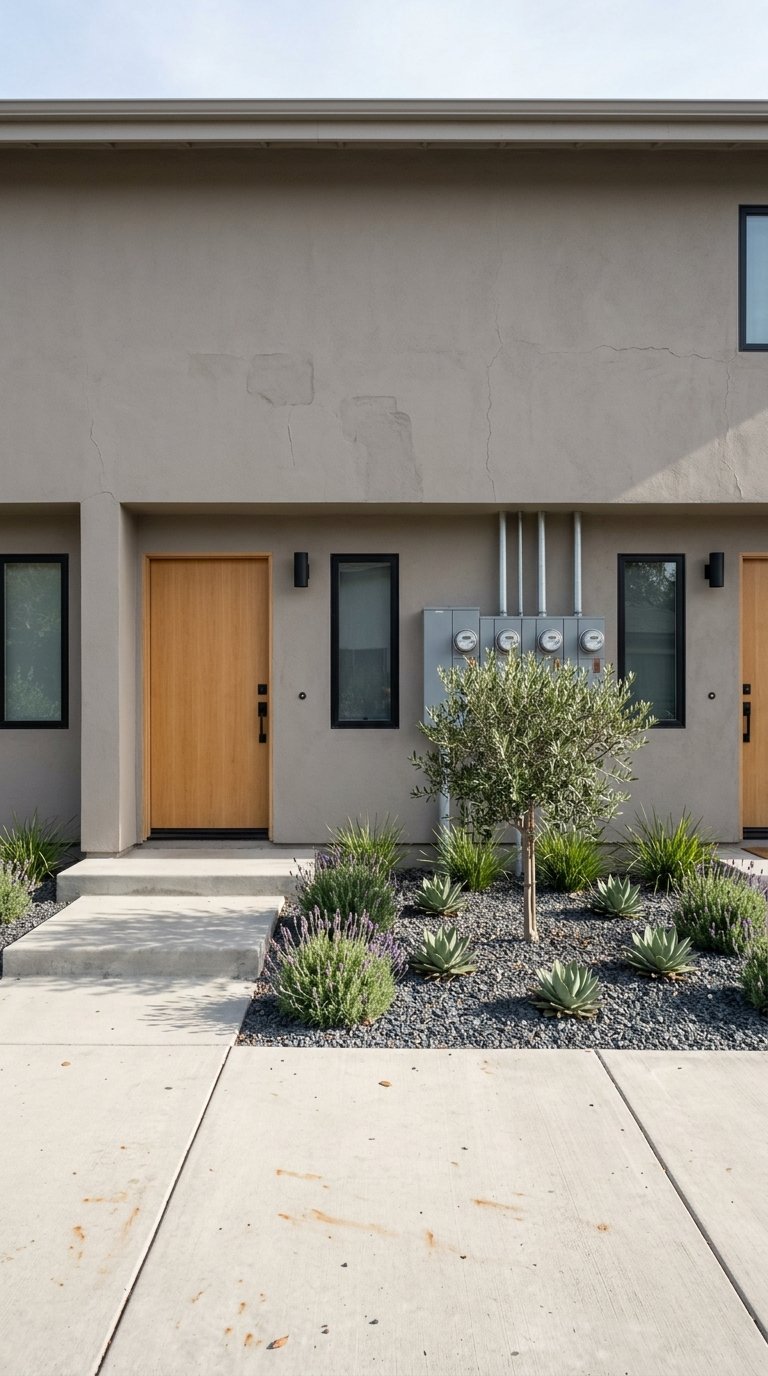
Your Guide to San Jose Small Multi-Unit Investments
May 7, 2026
May 7, 2026
Trying to make a small multi-unit property pencil in San Jose can feel like solving two problems at once. You want strong rent demand and long-term upside, but you also need to navigate high prices, local rent rules, and realistic renovation math. If you are considering a duplex, triplex, or fourplex in this market, understanding the details matters. Let’s dive in.
San Jose remains a premium multifamily market in the Bay Area. Recent market data showed advertised asking rents at $3,297 on a trailing three-month basis through January 2026, while stabilized occupancy reached 96.5% in December. That combination helps explain why many investors still target the city even when entry costs are high.
At the same time, this is not a simple cash-flow market. The city reported 3,861 completions in 2025, 4,372 units under construction, and about 59,000 units in the planning and permitting pipeline. In plain terms, demand has been healthy, but supply is still an important part of the story.
For small property buyers, that means San Jose often works best as a discipline-first market. You usually are not buying for a big day-one yield. You are buying for a mix of durable demand, potential rent growth, and carefully selected value-add opportunities.
If you are comparing San Jose with Oakland, Berkeley, or the broader East Bay, the numbers show a clear tradeoff. San Jose generally has higher rents and tighter occupancy, but lower cap rates. That means you are typically paying more upfront for each dollar of current income.
CBRE reported Q4 2025 average rents of $3,299 in San Jose/Silicon Valley, compared with $2,806 in Oakland/Berkeley and $2,628 in the East Bay. Vacancy also differed, with San Jose at 4.0%, Oakland/Berkeley at 5.9%, and the East Bay at 4.8%. For many buyers, that reinforces the idea that San Jose is a premium market, while parts of the East Bay may offer a higher going-in yield.
Recent sales data tells the same story. San Jose sale comps averaged a 4.8% cap rate and about $426,990 per unit, while East Bay sale comps averaged a 6.4% cap rate and about $316,961 per unit. If you invest in San Jose, you are usually underwriting stronger long-term upside rather than chasing the highest initial return.
One underwriting mistake can distort your entire deal model: mixing rent figures that are not measured the same way. San Jose city reports often use effective rent, while other market reports may use advertised asking rent. Those are not interchangeable.
The city’s Q4 2025 report showed average effective rent of $2,840 and vacancy of 4.2%. By contrast, Yardi reported asking rents of $3,297 in early 2026. If you are modeling income, make sure you know whether concessions or tenant-paid costs are already baked into the number.
Not every small multi-unit property offers the same risk profile. In San Jose, the type of building you buy can affect financing options, rent regulation, renovation upside, and management complexity. That is why duplexes, triplexes, and fourplexes should not be lumped together.
For many owner-occupants, a duplex is the cleanest place to start. San Jose’s Apartment Rent Ordinance applies to apartments with three or more units built and occupied before September 7, 1979, so duplexes are generally outside that local ordinance. That can make future planning easier compared with an older triplex or fourplex.
There is also a financing angle. FHA-insured financing can be used on 1-4 unit properties, and the down payment can be as low as 3.5% for eligible buyers. For a buyer who wants to live in one unit and rent the others, that keeps duplexes and some small multifamily properties very relevant even at Bay Area price points.
Older triplexes and fourplexes can still be attractive, but they require more diligence. In San Jose, the Apartment Rent Ordinance covers apartments with three or more units built and occupied before September 7, 1979, with a maximum allowable increase of 5% in a 12-month period for covered units. Increases after voluntary vacancy or lawful eviction are exempt, but you should confirm the status of each unit and building before assuming any rent upside.
San Jose’s Ellis Act ordinance also applies to buildings with four or more apartments. That does not mean a fourplex is a bad investment. It means you need to understand the regulatory framework before you rely on an aggressive repositioning plan.
San Jose can reward improvements, but the upside is often more nuanced than a basic renovation spreadsheet suggests. If a building is rent-controlled under local rules, you generally cannot assume large in-place rent increases just because units look nicer after the work. The path to higher income may depend more on turnover timing, exempt units, or permitted capital improvements.
That is one reason clean, functional workforce-oriented stock can be appealing. San Jose’s Q4 2025 report showed Class A vacancy at 5.5% and Class C vacancy at 3.5%. For many small investors, a practical Class C or light value-add property may offer a better risk-adjusted setup than a more expensive building competing with newer product.
Accessory dwelling unit potential is one of the more interesting value-add angles in San Jose. The city allows ADUs on residentially zoned properties, including single-family, duplex, and multifamily sites. For some buyers, that means the lot and layout may matter as much as the current unit interiors.
An ADU will not fit every site, and you still need to verify zoning, permitting, and design feasibility. But in a constrained, high-rent market, the ability to add a legal income-producing unit can meaningfully improve long-term value.
Cap rate is one of the fastest ways to compare opportunities, but it should be used the right way. At its simplest, cap rate is stabilized net operating income divided by acquisition price. It is a first-pass yield before financing.
In San Jose, cap rates tend to be lower because investors are willing to pay for market strength and future upside. Yardi reported average price per unit of $418,445 in 2025, and total multifamily investment reached $2 billion, the strongest year in more than a decade. That tells you capital is still flowing into the market, even with pricing that can feel demanding.
For a small investor, the takeaway is straightforward. A low cap rate does not automatically mean a bad deal. It means you need a sharper story for why the property will perform over time.
One reason San Jose continues to attract investors is the breadth of its renter base. Market research describes both higher-income lifestyle renters and renter-by-necessity households, with demand tied to a wide employment base across education and health services, leisure and hospitality, government, information, trade and transportation, and professional and business services. That variety can support demand across different property types and price points.
Submarket performance also matters. Recent research highlighted strong rent growth in places such as Santa Clara, North San Jose, and Central San Jose. If you are buying near these demand centers, you may see stronger long-term support for occupancy and rent growth than in a location that lacks the same demand drivers.
A small multifamily purchase in San Jose usually works best when you stay conservative. This market can punish overly optimistic assumptions, especially when buyers stretch on income growth or overlook regulation. Before you move forward, focus on the basics.
Small multi-unit investing in the Bay Area is rarely just about finding a property online and running a quick cap-rate calculation. In San Jose especially, the best opportunities often come down to local context, fast analysis, and a clear strategy for regulation, financing, and value-add potential. That is where a broker-led, high-touch approach can make a real difference.
At Dixit Properties, we work with buyers across the Bay Area on multi-unit acquisitions, including investor and owner-occupant strategies. Because we are a boutique brokerage, you get direct communication, practical market insight, and the kind of hands-on guidance that helps you compare San Jose opportunities against options in the East Bay and nearby markets.
If you are exploring a duplex, triplex, or fourplex in San Jose and want a grounded second opinion before you make an offer, Dixit Properties can help you evaluate the numbers, the regulations, and the strategy.
He have built a vast array of clients in the Bay Area, whether it be a luxury estate client, first-time homebuyer, or seasoned investor. The driving principles include putting the clients' needs first, built on a foundation of hard work, trust, and integrity.