Hayward Sellers: What Real Property Transfer Tax Costs
August 6, 2026
August 6, 2026
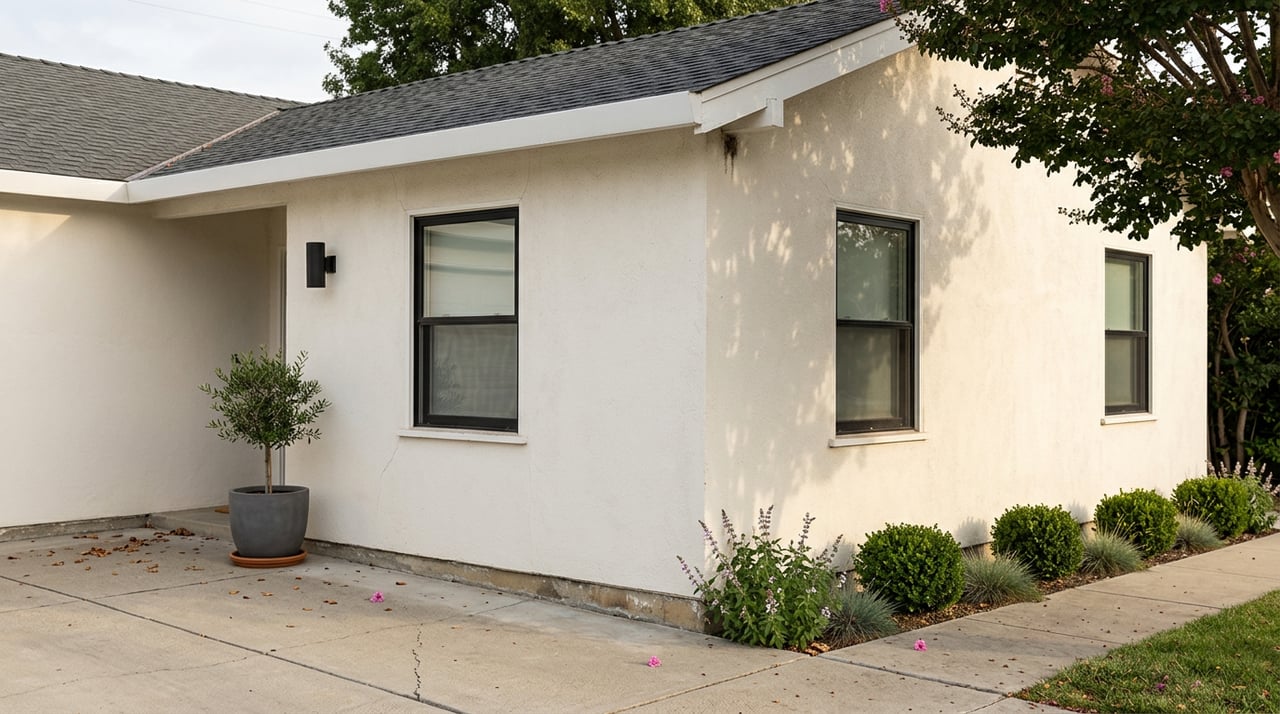
Picture two nearly identical three-bedroom homes selling this summer for $825,000. One sits on Tennyson Road in Hayward. The other sits a short drive south in Fremont. Same price, same closing date, same title company. At recordation, the Hayward seller writes a check for roughly $7,920 in combined city and county transfer tax. The Fremont seller writes a check for about $908.
That gap, more than $7,000 on the same sale price, is the single line item most Hayward sellers underestimate when they run their net proceeds. It is also the line item most agents present as fixed. It is not entirely fixed, and understanding why it exists is the first step to negotiating around it.
Hayward's Real Property Transfer Tax is $8.50 per $1,000 of the sale price, layered on top of Alameda County's countywide $1.10 per $1,000 documentary transfer tax collected by the Alameda County Clerk-Recorder. On the $825,000 median list price Hayward posted in July 2026, that works out to $7,012.50 to the city and $907.50 to the county for a combined $7,920 due at closing.
Put that against a same-price sale in surrounding cities and the picture changes fast.
| City | Rate per $1,000 | Total on an $825,000 sale |
|---|---|---|
| Fremont | $0.55 city + $0.55 county | ~$908 |
| Dublin | $0.55 city + $0.55 county | ~$908 |
| San Leandro | $6.00 + $1.10 | ~$5,858 |
| Hayward | $8.50 + $1.10 | ~$7,920 |
| Alameda | $12.00 + $1.10 | ~$10,808 |
| Piedmont | $13.00 + $1.10 | ~$11,633 |
| Oakland (tier: $300K–$2M) | $15.00 + $1.10 | ~$13,283 |
| Berkeley (up to $1.6M) | $15.00 + $1.10 | ~$13,283 |
Rate table from the California City Finance documentary transfer tax rates schedule, updated December 2025.
The thesis here is not that Hayward is expensive. It is that Hayward sits in a middle band that reads cheap next to Oakland and Berkeley and painfully expensive next to Fremont or Dublin, and a seller who benchmarks against the wrong neighbor will build the wrong net sheet.
Hayward is a chartered city. Under California's Revenue and Taxation Code, that status lets Hayward set its own transfer tax rather than accept the general-law default of $0.55 per $1,000 that Fremont, Dublin, Livermore, Newark, and Pleasanton still use. Chartered cities in Alameda County have used that authority aggressively.
The current $8.50 figure comes from Measure T, passed by Hayward voters in November 2018 and codified at Section 8-6.05 of the Hayward Municipal Code. It nearly doubled the prior $4.50 rate effective January 1, 2019, and Hayward's Director of Finance estimated at the time that the increase would generate around $13 million a year for streets, emergency response, and library services. The measure stays in force until voters repeal it, which they have not done.
The design detail sellers should register: the tax is based on the full sale price, not on equity. Whether you owe $50,000 or $500,000 on the mortgage, the RPTT is calculated off the top-line consideration.
Alameda County's customary practice, reflected in most local escrow instructions, is that the seller pays both the county and the city transfer tax. That is a convention, not a statute. The Measure T text itself does not assign the burden to buyer or seller. It imposes the tax on the transfer, and leaves the parties to negotiate.
In a slow spring, sellers occasionally get buyers to absorb half. In a competitive spring, buyers occasionally ask sellers to cover the entire amount as a concession dressed up as something else. What matters is that the RPTT is a negotiable line, not a fixed cost the escrow officer plugs in without discussion. A listing agent who treats it as unmovable is leaving a genuine bargaining chip on the table.
That flexibility matters more at Hayward's price band than it does in Fremont, because the dollar amount is meaningful. On an $825,000 sale, splitting the city portion 50/50 shifts about $3,500 back to the seller's side of the ledger.
Certain transfers are exempt from the tax entirely under state law and Hayward's own ordinance. Sellers who fit any of these situations should confirm the exemption with escrow before signing the preliminary settlement statement:
None of this is tax advice. It is a checklist to raise with your attorney or CPA before escrow opens, because once the deed records with the standard transfer tax declaration, unwinding it is slow.
The transfer tax lands after the sale closes, so it does not affect the offer price a buyer will pay. It affects what you take home. That distinction changes the math on two decisions Hayward sellers face regularly:
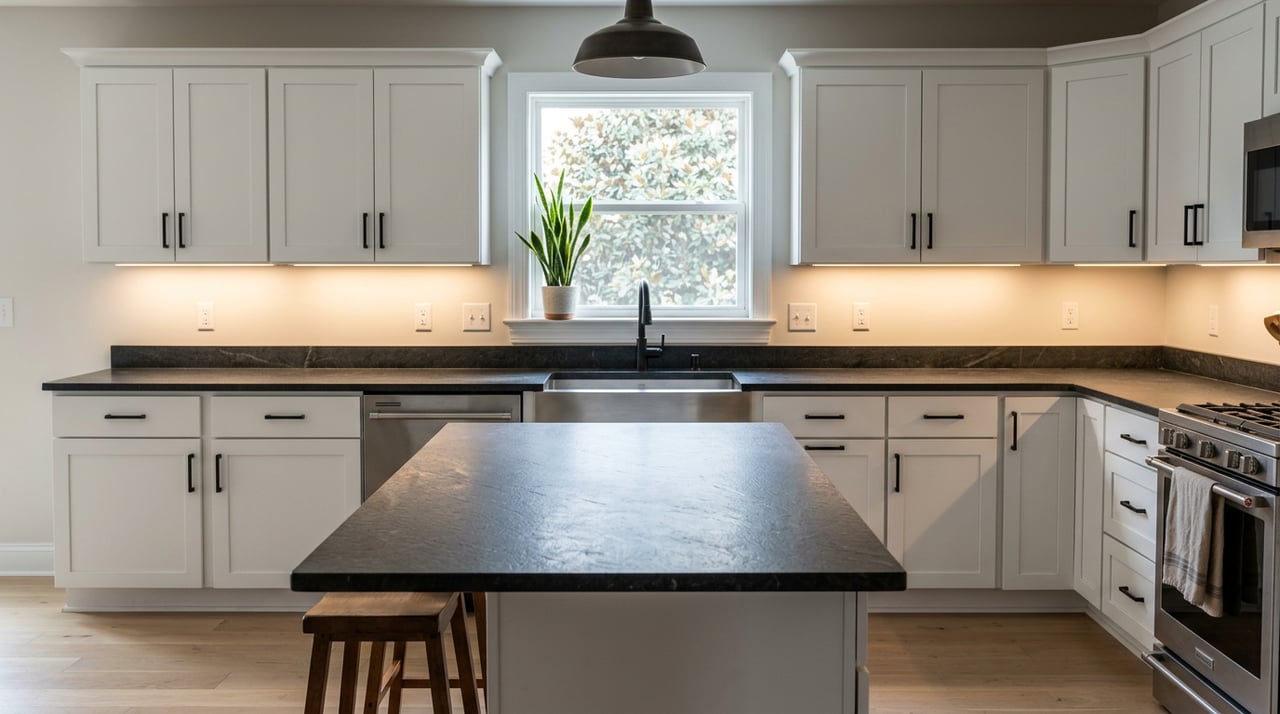
Pre-market improvements. If a $15,000 kitchen refresh moves your final sale price from $800,000 to $850,000, the extra $50,000 in gross proceeds costs you another $425 in city RPTT and $55 in county tax. The math still favors the improvement, but not by the full $50,000. This is one reason we walk clients through a full net sheet, not just a comp analysis, before recommending renovations through our Curbio partnership.
Price banding. Unlike Oakland's tiered structure, Hayward's tax is flat. There is no cliff at $300,000 or $2,000,000 that a strategic list price can avoid. A seller does not gain anything by pricing at $999,000 rather than $1,000,000 for RPTT reasons. In Oakland or Berkeley that game exists. In Hayward it does not.
Investor 1031 exchanges. Transfer tax applies whether the sale funds an exchange or a taxable disposition. Investors modeling cap-rate exits on Hayward duplexes should build the $8.50 into their exit costs alongside commission, title, and county recording fees.
If my buyer agrees to cover the city portion, does it still show up on my settlement statement? Yes. The tax is assessed against the transfer, and the county recorder does not care who paid. Escrow will show a credit from buyer to seller equal to the negotiated portion, and the total tax will still appear on the recording line. Your net proceeds figure is what changes.
Is the tax deductible on my federal return? Real property transfer taxes are generally not deductible against ordinary income, though they can be added to your cost basis to reduce capital gains on the sale. Confirm with your tax preparer, because how you treat it depends on whether the property was a primary residence, rental, or investment.
Does the tax apply if I add my adult child to the title or refinance? A refinance is not a transfer of title and does not trigger RPTT. Adding a family member to title is a transfer and can trigger the tax on the portion of interest conveyed, though several intra-family exemptions may apply. This is a case where a pre-signing conversation with an estate attorney costs less than the tax you might otherwise owe.
Has the rate changed recently, and could it change again? The $8.50 rate has been in effect since January 1, 2019. Any future increase would require another voter-approved ballot measure. Berkeley voters approved changes to their tiered structure in November 2024 that take effect in 2027, so precedent for further East Bay adjustments exists.
The transfer tax is not the largest cost of selling a home in Hayward. Commission and prep work exceed it comfortably. It is, however, the cost most sellers first encounter three days before closing, when the escrow officer emails the preliminary settlement and the number is suddenly real. A boutique brokerage's job is to make sure that number is never a surprise, and to identify every legitimate lever, negotiated split, timed improvement, or exemption filing, that keeps more of your equity where it belongs.
If you are considering listing this year and want a line-by-line net sheet before you decide on a strategy, request a free consultation with Dixit Properties. We will walk you through what an offer at today's Hayward pricing actually delivers to your bank account after every closing cost is accounted for, transfer tax included.
He have built a vast array of clients in the Bay Area, whether it be a luxury estate client, first-time homebuyer, or seasoned investor. The driving principles include putting the clients' needs first, built on a foundation of hard work, trust, and integrity.