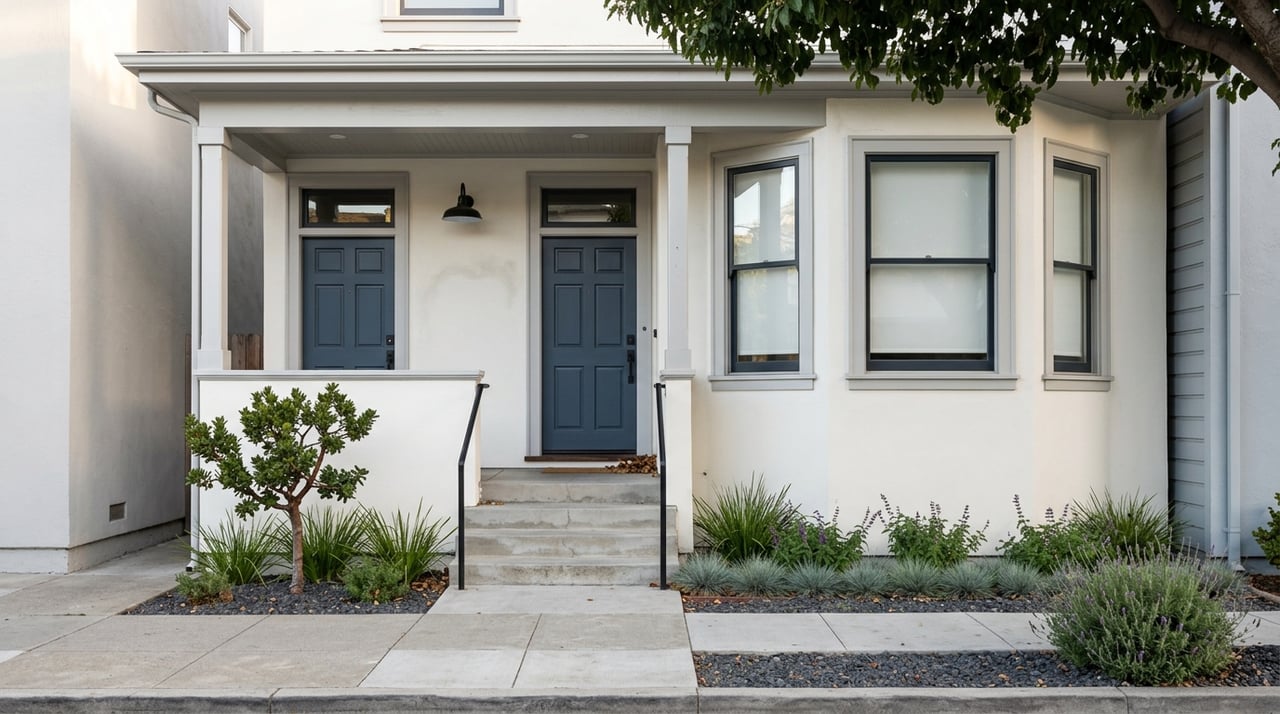
Oakland House Hacking Duplex Guide for Smart Buyers
July 16, 2026
July 16, 2026
Buying a duplex or triplex in Oakland can look like a smart shortcut to lower housing costs, but it only works when the numbers and the rules work together. If you want to live in one unit and rent out the others, you need to think beyond the mortgage payment and understand how financing, tenant protections, and older-building issues can shape the deal. This guide will help you evaluate Oakland house hacking with clearer expectations and a more practical game plan. Let’s dive in.
Oakland offers something many buyers want: a large renter market and a real chance to offset your monthly housing costs with rental income. The city’s owner-occupied housing unit rate is 42.3% in the Census Bureau’s 2020-2024 ACS profile, which helps explain why owner-occupants often look to small multi-unit properties as a way to make ownership more manageable.
That said, Oakland is not a simple plug-and-play market for duplexes and triplexes. The city combines strong rental demand with layered local rules, registration requirements, and an older housing stock. For you as a buyer, that means a house hack here often requires more due diligence than a typical single-family purchase.
A big part of the Oakland story is the age of the housing. In the city’s housing needs assessment, 37.6% of units were built in 1939 or earlier, and another 21.6% were built from 1940 to 1959. That older inventory can create opportunity, but it can also mean more repairs, more permit questions, and more uncertainty around what was done legally.
If you are comparing a duplex in Oakland to a newer property in a suburban market, expect the Oakland property to require deeper inspection work. Roofs, plumbing, electrical systems, and layout changes may all deserve extra scrutiny, especially if you plan to rely on rental income soon after closing.
For many buyers, FHA financing is one of the most practical ways to get into a duplex or triplex. HUD says FHA-insured loans can be used on one- to four-unit properties when the borrower occupies the property as a principal residence, and the minimum required investment is 3.5% in most cases.
That lower entry threshold is a big reason FHA often comes up in house-hack conversations. If your goal is to live in one unit and rent the others, FHA can make the numbers more reachable than you might expect.
Oakland’s older housing stock makes rehab financing especially relevant. HUD’s 203(k) program can finance both the purchase and renovation of two- to four-family properties, which may help if a duplex or triplex needs meaningful work before one of the units is truly rental-ready.
This matters in Oakland because deferred maintenance is not unusual. If the property needs plumbing, electrical, roof, or interior updates, a rehab loan may be worth discussing early rather than trying to patch together a plan after you are in contract.
Conventional financing is also available for owner-occupied small multifamily properties, but the down payment picture can change depending on the loan product and number of units. Fannie Mae’s current eligibility matrix shows up to 95% loan-to-value for two- to four-unit principal residences.
Freddie Mac is more restrictive for larger small multifamily properties. Its matrix shows 95% for two-unit primary residences, but 80% for three- and four-unit primary residences. If you are comparing a duplex to a triplex, that difference alone can materially change your cash needed to close.
One of the biggest mistakes buyers make is assuming projected rent will count dollar for dollar. Fannie Mae says rental income from a two- to four-unit primary residence can be used in qualifying, but when current leases or market rents are used, gross monthly rent is multiplied by 75%.
That lender haircut matters. Even if the unit seems capable of producing a certain rent on paper, your lender may underwrite it more conservatively, especially if repairs are needed or documentation is limited.
Do not assume every first-time buyer assistance program will work for a duplex or triplex. CalHFA’s MyHome Assistance Program is for a one-unit residence, including approved condos and planned unit developments.
If your plan depends on down payment assistance, verify property-type eligibility before you build your search around it. This is one area where a financing strategy should come before the property hunt, not after.
Oakland’s Rent Adjustment Program is a petition-based system used by owners and tenants to challenge certain rent increases, seek rent decreases for service losses or code issues, and resolve disputes. For a house hacker, this means rental income is not just about market demand. It is also about how local rules apply to the actual unit you plan to rent.
As of July 12, 2026, the current allowable annual rent increase for covered units is 0.8% through July 31, 2026. The city says that allowable increase will move to 2.3% on August 1, 2026. If you are building a long-term budget, that is a reminder not to treat a covered Oakland unit like a fast-rent-growth asset.
Oakland says the Rent Adjustment Ordinance applies to rental units in most multifamily properties built before January 1, 1983. It also says single-family homes and condos are generally excluded.
This is one reason duplexes and triplexes often operate very differently from a detached single-family home used as a house hack. In Oakland, a small multifamily property may fall into a more regulated category right away.
Oakland’s Measure Y removed the just-cause exemption for owner-occupied duplexes and triplexes. The city also states that sale of a property, changes in rental-unit status, and lease expiration are not just-cause grounds for eviction.
For you as a buyer, this is a major underwriting point. If a duplex or triplex has tenants in place, you should evaluate it as a long-term operating property rather than assuming you can create vacancy quickly after closing.
Oakland also requires rent-registry compliance for covered units. If one unit is owner-occupied and another is rented, the city’s instructions say the owner should file a property registration form plus a tenancy registration form for the rented unit and claim exemptions for units that are not rented.
This is not the glamorous side of house hacking, but it matters. Compliance should be treated as a normal part of ownership costs and responsibilities in Oakland.
When you are looking at an older duplex or triplex, permit history should be part of your core due diligence. Oakland’s historic-preservation guidance recommends using city permit records and Oakland History Center records when researching older buildings.
The city’s Residential Building Record, also called the 3R Report, is described as a formal document that provides permit history for a residential property. If a seller advertises extra rooms, updated layouts, or major systems work, you want to know what is documented.
Because many Oakland properties were built before 1978, lead-based paint disclosure is a practical concern. EPA says buyers and renters of most pre-1978 housing have the right to know whether lead-based paint hazards are present before signing, and sellers and landlords must disclose known information.
If you plan renovations after closing, this issue becomes even more important. Any work that disturbs paint in older homes should be approached carefully and with lead-safe practices in mind.
One point in favor of smaller multifamily ownership is that Oakland’s mandatory soft-story retrofit program does not apply to buildings with fewer than five units. For duplexes and triplexes, that can remove one major compliance issue that often affects larger apartment buildings.
That does not mean you can skip structural evaluation. It simply means this specific city program is not usually the obstacle for a two- or three-unit property.
The best Oakland house hacks usually work because the legal rent supports the deal, not just the optimistic market-rent scenario. In a city with regulated rent increases and strong tenant protections, conservative assumptions are your friend.
When you run the numbers, build in more than principal and interest. You should also account for property taxes, insurance, vacancy, maintenance reserves, compliance costs, and likely rehab expenses. In Oakland, those line items matter because older buildings and local rules can slow the path to higher income.
A practical screening checklist can help:
In many cases, the best candidates are not the flashiest listings. A strong house-hack property in Oakland is often one with a clear legal setup, manageable deferred maintenance, realistic rents, and a tenancy situation that does not depend on a major post-closing change.
That may sound less exciting than chasing a value-add story, but it is often the more durable path. In this market, a clean and predictable duplex or triplex can be far more useful than a “deal” with unresolved permit issues or unrealistic rent assumptions.
Small multifamily buying in Oakland sits at the intersection of financing, local rules, and property condition. That is where a broker-led, high-touch approach can make a difference, especially if you are trying to balance owner-occupant goals with investor-style analysis.
At Dixit Properties, we help Bay Area buyers look at multi-unit opportunities with a practical lens, from early property screening to neighborhood-level context and offer strategy. If you are exploring an Oakland duplex or triplex and want a clear plan before you make a move, Dixit Properties can help you evaluate your options.
He have built a vast array of clients in the Bay Area, whether it be a luxury estate client, first-time homebuyer, or seasoned investor. The driving principles include putting the clients' needs first, built on a foundation of hard work, trust, and integrity.